
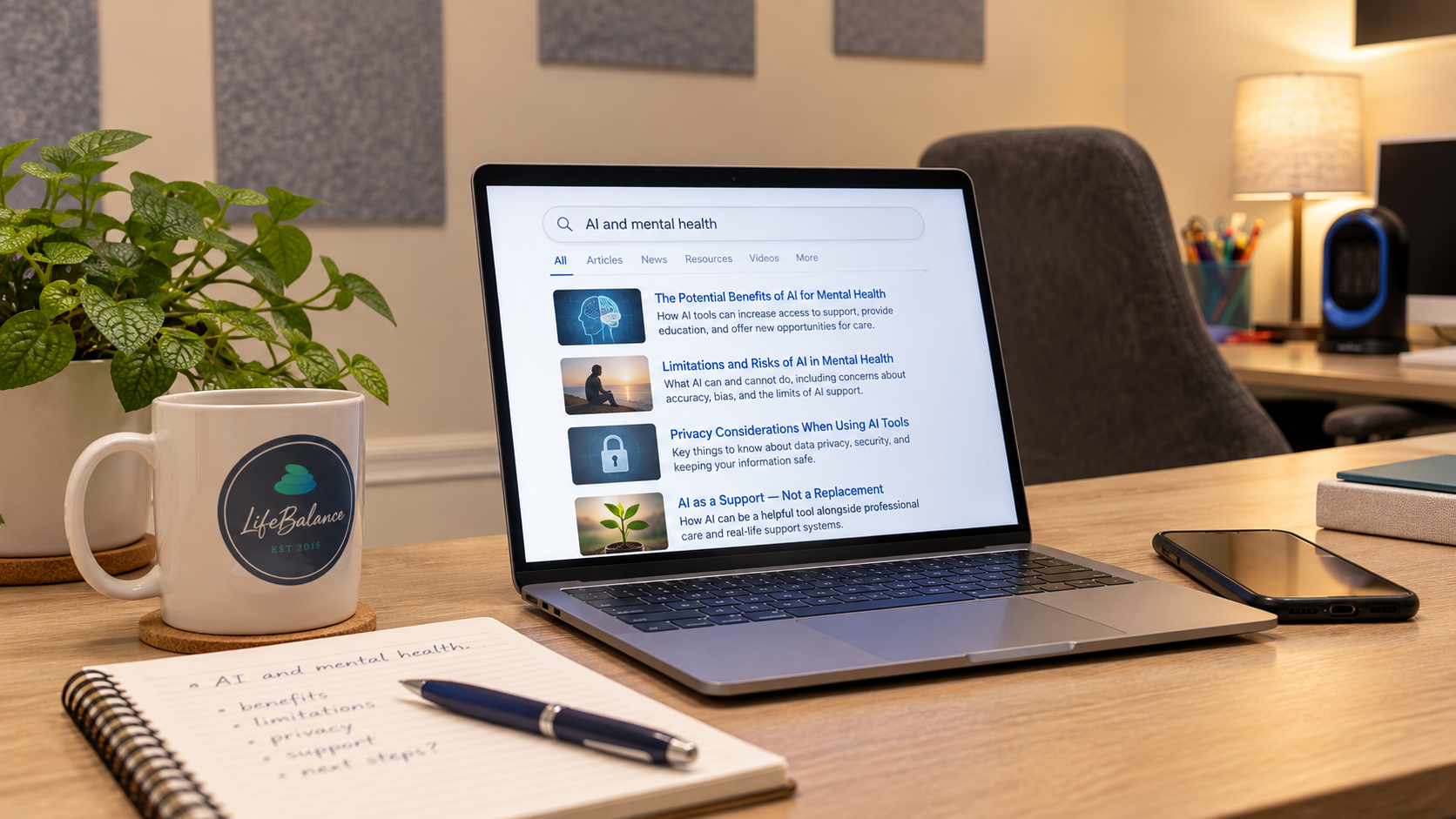
AI can be helpful for reflection, education, brainstorming, and organizing questions. It should not become the final authority on your mental health.
AI can sound confident even when the information is incomplete, outdated, oversimplified, or simply wrong. That is part of what makes it tricky. A polished answer can feel trustworthy because it is clear and well written. Clarity is not the same thing as accuracy.
I would build the blog around a few practical ideas.
First, use AI as a starting point, not the finish line. If it gives you information about a diagnosis, medication, treatment, supplement, symptom pattern, or clinical concept, ask what evidence supports it.
Second, check the source behind the claim. Look for peer-reviewed research, professional organizations, government health agencies, academic medical centers, or established clinical guidelines. If you cannot trace the claim to something credible, treat it cautiously.
Third, bring useful information into the therapy room or medical appointment. If something you read resonates, save it. Print it. Take a screenshot. Bring the question with you.
You do not need to arrive saying, “AI told me this is definitely what is happening.”
You can say:
“I read this explanation and parts of it felt familiar. Can we talk about whether it actually fits me?”
That opens a much better clinical conversation.
I would also include a section on self-diagnosis.
AI can help someone find language for an experience. That can be genuinely useful. But matching yourself to a list of symptoms is different from a clinical assessment.
Context matters.
Duration matters.
Severity matters.
Medical history matters.
Medication matters.
Sleep matters.
Trauma history matters.
Substance use matters.
Hormones matter.
Other diagnoses matter.
Human beings are complicated.
And mental-health symptoms overlap constantly.
I would also address the emotional-support side of AI.
Some people use AI because they want immediate reassurance, help calming down, or someone to respond at 2:00 AM.
That makes sense.
But there is a risk that AI starts reinforcing reassurance-seeking rather than helping someone tolerate uncertainty or build real-world support.
That is especially relevant for anxiety and OCD patterns.
A person can end up asking the same question in slightly different ways until they receive the answer that feels safest.
That may lower anxiety briefly.
But it can strengthen the cycle.
Another useful section would be:
Ask AI Better Questions
Instead of:
“Do I have ADHD?”
Try:
“What are the common symptoms of ADHD in adults, and what other conditions can look similar?”
Instead of:
“Should I stop this medication?”
Try:
“What questions should I ask my prescriber about side effects I am noticing?”
Instead of:
“Is this supplement safe?”
Try:
“What evidence exists for this supplement, what are the known risks, and what interactions should I ask my medical provider about?”
That shifts AI from decision-maker to question-builder.
I would also include a short fact-checking checklist:
Before accepting a mental-health claim from AI, ask:
What is the source?
Is the information current?
Is it based on research or opinion?
Does a professional organization support it?
Is the claim specific to my situation, or is it generic?
Could there be another explanation?
Is this something I should discuss with a therapist, physician, psychiatrist, dietitian, or pharmacist?
And I would close with something like this:
AI can be useful.
It can help us organize thoughts, learn new language, generate questions, and find a place to start.
But a confident answer is still only an answer.
Mental health deserves curiosity, context, evidence, and human judgment.
If something AI tells you feels deeply accurate, surprising, frightening, or important, bring it into a conversation with a qualified professional.
You do not have to throw the information away.
Just do not ask it to carry more authority than it has.
