
Mental Wellness in Motion
Your mental health deserves daily care—not just in moments of stress, but in the quiet in-betweens too. This blog is a space to explore thoughtful insights, therapist-backed guidance, and real-world tools that support emotional balance and personal growth. From building healthier relationships to managing anxiety or cultivating mindfulness, each post is designed to help you feel more grounded, connected, and in control of your inner world.
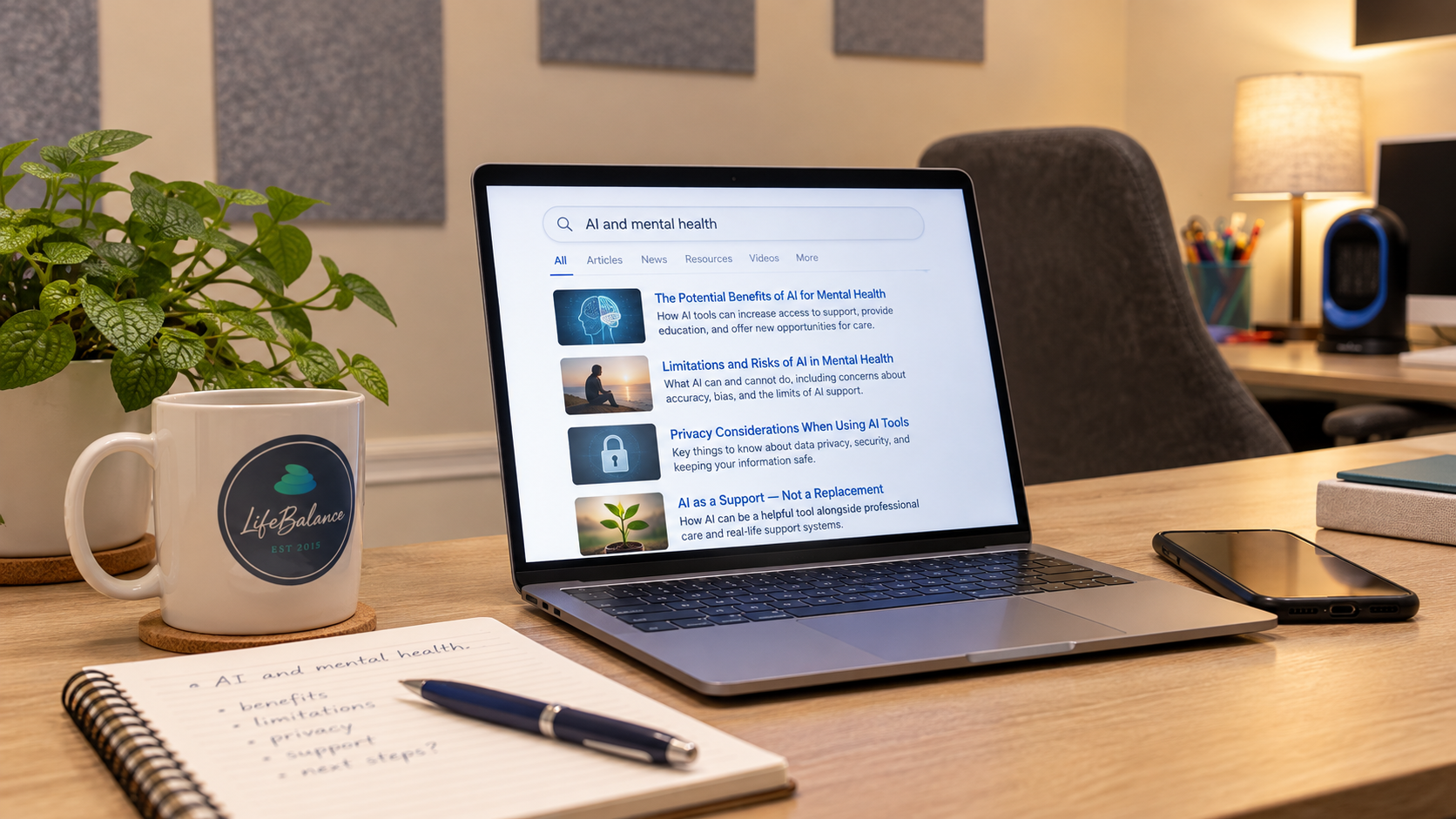
AI and Mental Health: Useful Tool, Convincing Voice, Imperfect Source
AI can be incredibly convincing.
It can also be wrong.
People are increasingly using AI to understand anxiety, depression, ADHD, medications, supplements, relationships, symptoms, and mental-health diagnoses. It can help us find language for what we are experiencing, organize questions, and understand unfamiliar concepts.
But a clear, confident answer is not automatically an accurate one.
In our newest blog, we look at how to use AI without giving it more authority than it deserves.
We talk about:
🔎 How to fact-check mental-health information
🧠 Why self-diagnosis needs more context than a symptom list
💬 How to bring AI-generated information into therapy or a medical appointment
🔁 Why AI can accidentally feed anxiety and reassurance-seeking loops
🔐 The importance of thinking carefully about privacy
❓ How changing the questions we ask AI can make it a much more useful tool
Instead of asking:
“Do I have ADHD?”
Try:
“What are common symptoms of ADHD in adults, and what else can look similar?”
Instead of:
“Should I stop this medication?”
Try:
“What questions should I ask my prescriber about the side effects I’m noticing?”
That distinction matters.
AI can help us organize thoughts, learn new language, and figure out what questions we want to ask.
But mental health deserves context, evidence, curiosity, and human judgment.
Useful tool? Absolutely.
Final authority? No.

Burnout vs. Depression: How to Tell the Difference
Loneliness in midlife often surprises people.
Not because they’re isolated—but because they’re surrounded.
Surrounded by children who need emotional support.
Parents who need care.
Work that requires constant presence.
People who depend on them to remember, organize, and hold things together.
And yet, many women quietly say:
“I feel invisible.”
“I don’t know who I am outside of what I do.”
“I miss myself.”
As a clinician, a practice owner, a parent to teens, and someone supporting aging parents, I recognize this experience personally—and I see it daily in my work.
This is a loneliness that doesn’t come from lack of connection.
It comes from lack of space.

